
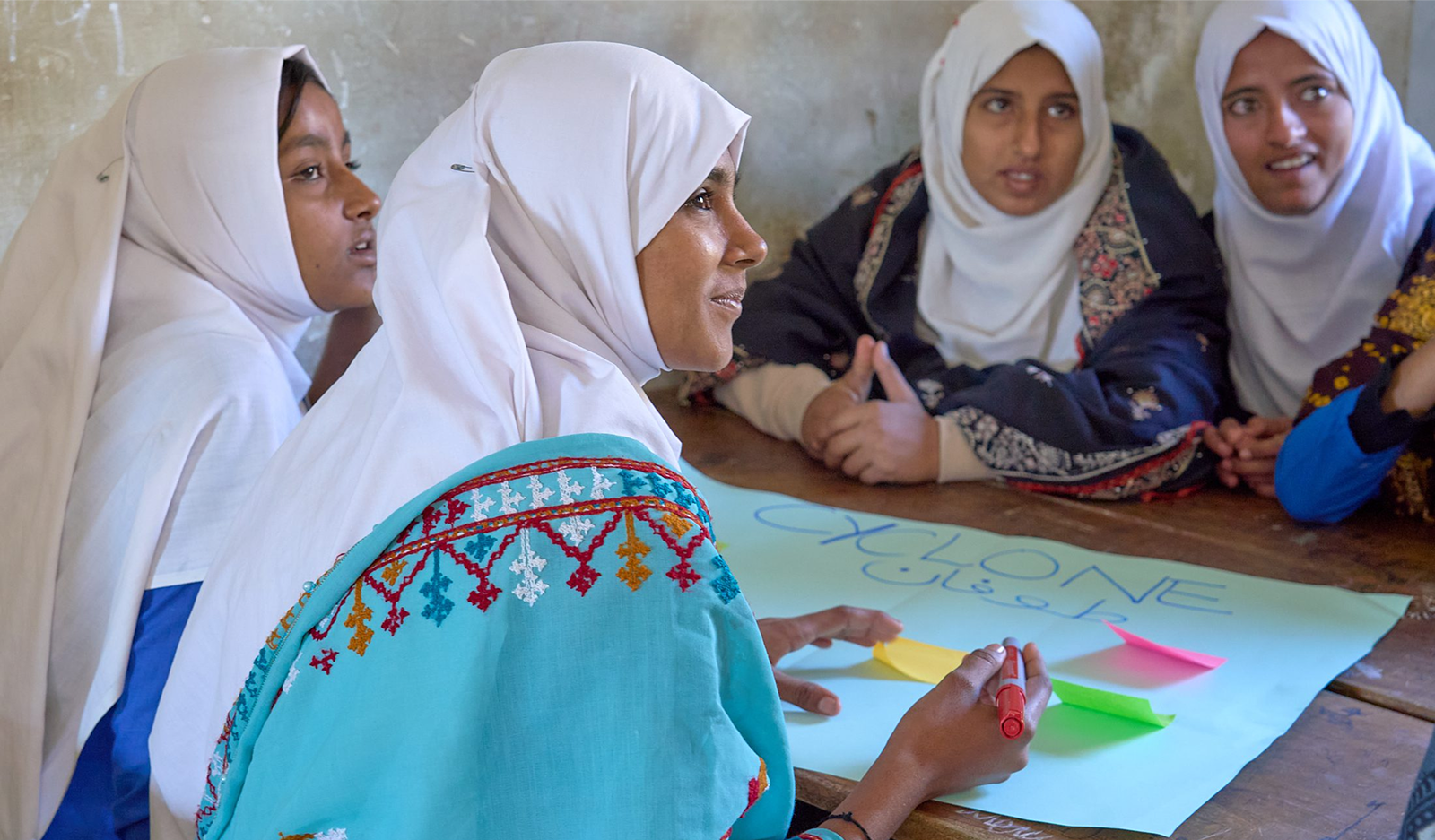
Climate Champions in Pakistan’s Sindh province provide a vital link between communities and essential health care.
Imagine a doctor performing surgery or treating a patient without lights, or a pregnant woman unable to reach a hospital as floodwaters rise. These aren’t hypothetical scenarios; they’re the harsh realities faced by health systems in regions vulnerable to climate emergencies, making consistent, quality healthcare delivery nearly impossible and putting countless lives at risk.
At Pathfinder, we believe in proactive solutions. We’re working hand-in-hand with governments and local partners to build robust health system preparedness, ensuring that vital services endure even when disaster strikes. Our work in Pakistan and Bangladesh offers a powerful testament to this approach.
In the two countries, Pathfinder conducted detailed health facility readiness assessments across more than 800 health facilities through our Advancing the Leadership of Women and Girls Towards Better Health and Climate Resilience Program. The findings were clear: infrastructure, supplies, and services are critically vulnerable during climate emergencies, yet few facilities had contingency plans in place.
In Pakistan, we worked with Department of Health, Peoples’ Primary Healthcare Initiative, and the Provincial Disaster Management Authorities in Sindh province on contingency plans for 492 health facilities. These plans ensure continued provision of essential medicines and supplies for nearby communities; clearly define the roles of health facility staff particularly when it comes to responding to disasters; and, ensure referral linkages with public and private health providers, emergency services, disaster management authorities, and climate champions who work in nearby communities.
Similarly, in Bangladesh, after sharing the findings from assessment of 341 health facilities with the government, Pathfinder identified risk mitigation areas. We then worked with Union Disaster Management Committees, facility management committees, women’s groups, and schools to develop community risk reduction and school safety plans, incorporating contingency planning and allocating resources for health facilities to enhance climate-induced disaster preparedness and response.
Through collaborative workshops in both countries, these contingency and disaster risk reduction plans are being incorporated into centralized emergency planning mechanisms managed by district-level government bodies. This ensures the plans are institutionalized, receive government resources, and that health facilities have access to government-managed emergency hotlines and stock lists. Referral mechanisms are also established between public and private health facilities—when services at one clinic are down, another clinic can step in to serve clients in an emergency.